
Ever stood in front of your closet, unsure of what to wear? Choosing the right outfit is tough for many women in India. You want to look effortlessly stylish and stay cool in our hot climate.
The debate is simple: cotton kurti vs synthetic kurti. Natural fibers keep you cool in summer. But man-made materials are bright and easy to care for. Knowing this helps you build a wardrobe that’s both stylish and comfy.
In this guide, we’ll look at how fabric choice affects your comfort. Let’s get into the details to help you choose wisely for your lifestyle.
Key Takeaways
- Natural fibers are better for hot and humid weather in India.
- Man-made fabrics keep their shape well and need less ironing.
- Your fabric choice affects your comfort during long days at work.
- Balance your style with what you need for daily life.
- Knowing about fabrics helps you buy pieces that last.
The Daily Wear Dilemma: Understanding Your Fabric Choices
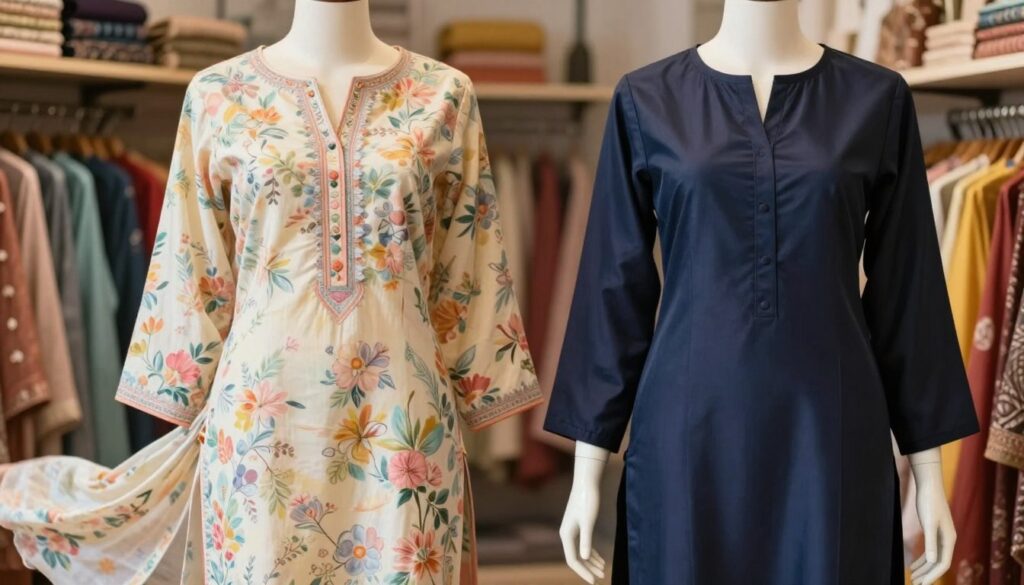
Ever wonder why some clothes feel like they’re made for you? Others make you feel stuck and uncomfortable. Picking the right fabric for your daily clothes is key to feeling good. When you choose between cotton vs synthetic kurti, you’re picking how you’ll feel all day.
Why Fabric Matters for Your Everyday Comfort
Your skin is huge and it talks to the clothes you wear all day. Natural fibers let your skin breathe. This stops sweat and heat from building up.
Working long hours or commuting a lot? Choosing the best kurti material is crucial. It keeps your skin from getting irritated or rashy.
Synthetic fabrics hold heat, making you feel hot and sweaty. They last long but might not cool you down in India’s weather. Wearing breathable fabrics keeps you feeling fresh and confident all day.
The Evolution of Kurti Fabrics in Modern Indian Fashion
Indian ethnic wear has changed a lot in recent years. Old days, we wore hand-woven stuff like khadi and cotton. They were cool because they let air in.
Now, designers mix natural and synthetic fibers. This gives us stylish clothes that don’t need ironing or special care. Knowing this helps you pick clothes that fit your life better.
| Feature | Pure Cotton | Synthetic Blends |
|---|---|---|
| Breathability | High | Low to Moderate |
| Maintenance | Requires Ironing | Wrinkle-Resistant |
| Skin Feel | Soft and Natural | Smooth but Non-porous |
| Best Use | Daily Summer Wear | Formal or Office Wear |
Deep Dive into Cotton Kurtis: Why They Are a Staple
Choosing the right fabric for your daily wear is key. Cotton is the top choice in Indian homes. It beats synthetic fabrics for handling the local weather.
Natural Benefits of Pure Cotton
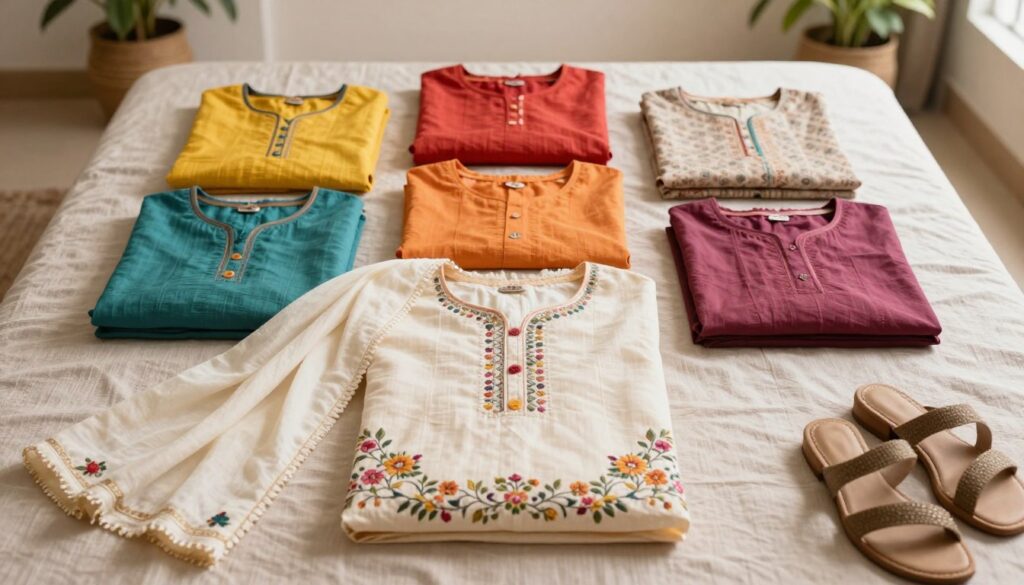
The main cotton kurti benefits are its breathability. Synthetic fabrics hold heat, but cotton lets air flow. This keeps you cool and dry, even when it’s hot.
Cotton is also hypoallergenic. It’s soft on sensitive skin. This makes it safe for wearing all day.
Common Types of Cotton Used in Kurtis
Not all cotton is the same. Knowing the types helps you shop better. Designers pick specific weaves for different looks:
- Cotton Voile: Light and semi-sheer, great for summer.
- Cambric: Fine and opaque, perfect for prints.
- Poplin: Crisp and durable, good for structured kurtis.
Handloom Cotton vs Mill-Made Cotton
Knowing handloom vs mill-made cotton is important. Handloom cotton is made on old looms. It has a unique texture and is breathable.
Mill-made cotton is made in big batches. It looks uniform but may not have the handloom charm. Both fit in your wardrobe, depending on what you like.
Exploring Synthetic Kurtis: Style and Durability
Synthetic fabrics change how we wear to work. They mix effortless style with strong features. Choosing them means picking clothes that last through busy days and look great.
Many people love the synthetic kurti advantages. They are easy to care for and keep looking good all day. Unlike natural fibers, they don’t need constant care.
Understanding Polyester and Rayon Blends
Synthetic kurtis are made from polyester and rayon. Polyester is strong and lasts long. Rayon makes them soft and feel like silk.
This mix makes the fabric strong and nice to look at. When you compare a cotton vs polyester kurti, the synthetic one feels smoother and keeps its shape better.
Why Synthetic Fabrics Are Popular for Office Wear
In busy offices, you need clothes that keep up. Synthetic kurtis are great because they need little care. This lets you focus on your work, not your clothes.
These fabrics are exceptionally resilient. They’re perfect for long days and lots of meetings. Your clothes will stay professional all day.
Wrinkle Resistance and Color Retention
Synthetic blends don’t wrinkle easily. You don’t need to iron them, saving you time. They stay smooth all day.
They also keep their color well, looking bright and new. While cotton might be breathable, synthetic fabrics’ color and style are why they’re popular at work.
A Direct Cotton Kurti vs Synthetic Kurti Comparison
When you pick clothes, cotton or synthetic depends on your day. Knowing the cotton kurti vs synthetic kurti debate helps. It’s about style and what you need every day.
Key Differences at a Glance
Looking at how these materials work in real life helps. This kurti fabric comparison shows main differences. Think about these before buying.
| Feature | Cotton Kurti | Synthetic Kurti |
|---|---|---|
| Breathability | High | Low |
| Wrinkle Resistance | Low | High |
| Durability | Moderate | High |
| Maintenance | Easy Wash | Low Ironing |
When to Choose Cotton Over Synthetic
Choose cotton for hot, humid weather and sensitive skin. It’s breathable and comfy. It’s great for long wear.
Cotton is also good for sensitive skin. It’s hypoallergenic. You won’t get irritated, even when active.
When to Choose Synthetic Over Cotton
Synthetic fabrics are best for a polished look all day. They’re wrinkle-resistant. Perfect for work where you need to look sharp.
Synthetic fabrics also keep colors bright and last long. They’re great for a busy life. They stay looking good after many washes.
Comfort and Breathability: The Battle of the Fabrics
Ever wondered why some kurtis feel cool while others feel hot? Choosing between a cotton vs synthetic fabric kurti affects how you stay cool. Knowing how these fabrics work helps you pick the right clothes.
Moisture-Wicking Properties of Natural Fibers
Natural fibers, like pure cotton, are great at keeping you cool. Cotton soaks up sweat and lets it dry out. This is key in hot weather, keeping you dry and comfy.
Cotton lets air move around, stopping sweat from getting stuck. This natural cooling effect is why cotton is a top choice. Your skin will thank you for the fresh air.
The Heat Retention Factor in Synthetic Materials
Synthetic materials, like polyester, don’t let air through as well. A cotton vs polyester kurti shows polyester holds heat. This makes you feel hot, even in cool places.
Polyester is strong and keeps its shape, but it’s not good at cooling. Wearing it in hot weather can make you feel warmer. Choosing the right material is key to staying cool all day.
Maintenance and Longevity: Which Fabric Lasts Longer?
Choosing between natural and synthetic fibers matters. But, how you take care of them is key. Cotton is strong but needs special care to stay bright. Synthetics, on the other hand, must avoid heat damage.
By sticking to a routine, your kurtis will stay beautiful for a long time.
Washing and Drying Tips for Cotton
Cotton is tough but needs gentle care. Always wash cotton kurtis in cold water. This stops them from shrinking or losing color.
Use a mild detergent to keep the fibers strong. This helps them last longer.
Don’t dry cotton in direct sunlight. It can fade too fast. Hang them in a cool, breezy spot instead. This keeps the fabric soft and prevents it from getting stiff.
Caring for Synthetic Fabrics to Prevent Pilling
Synthetic fabrics are stylish but can pill if not cared for. Always turn synthetic kurtis inside out before washing. This reduces rubbing against other clothes.
“Quality is never an accident; it is always the result of high intention, sincere effort, intelligent direction and skillful execution.”
Don’t use hot dryer settings. High heat can melt synthetic fibers. Air drying is best to keep them looking smooth.
Storage Advice for Daily Wear Kurtis
Storing kurtis right is as important as washing. Fold cotton kurtis neatly to keep them from stretching. Hang synthetic ones on padded hangers to keep their shape.
Keep your closet dry to stop mildew on natural fibers. Use cedar blocks or silica gel to control humidity. This keeps your clothes fresh and ready to wear.
| Fabric Type | Washing Method | Drying Preference |
|---|---|---|
| Pure Cotton | Cold Water | Shade Dry |
| Synthetic Blend | Inside Out | Low Heat/Air Dry |
| Rayon/Viscose | Hand Wash | Flat Dry |
By following these tips, you’ll learn how to care for your clothes. Regularly compare your kurtis to see how long they last with proper care.
Aesthetic Appeal and Versatility in Daily Fashion
What you wear every day matters a lot. It’s not just about feeling comfy. The look of your clothes also depends on the fabric. Knowing this helps you pick outfits that show off your style.
Draping and Silhouette Differences
Cotton clothes give a structured and crisp look. They’re great for work or formal events. Cotton clothes keep their shape well, looking neat and traditional.
On the other hand, synthetic fabrics drape smoothly. They hug your body, making your clothes look soft and flowing. This is a big plus for synthetic kurti advantages. It lets you wear clothes that are both stylish and easy to move in.
Color Vibrancy and Print Longevity
Fabric type affects how your clothes look over time. Synthetic fibers keep colors bright, even after many washes. This is great for keeping your clothes looking new for a long time.
Natural fibers like cotton have a special, earthy look. But, they might fade a bit. If you love vibrant colors and clear prints, synthetic fabrics are better. They keep your clothes looking sharp without needing a lot of care.
| Feature | Cotton Kurtis | Synthetic Kurtis |
|---|---|---|
| Silhouette | Structured and Crisp | Fluid and Flowy |
| Color Retention | Natural/Muted over time | High Vibrancy |
| Print Clarity | Soft/Matte finish | Sharp/Defined finish |
| Best For | Formal/Daily Office | Casual/Events |
Skin Sensitivity and Health Considerations
Have you thought about how your clothes affect your skin? Style is important, but the fabric matters too. Knowing the cotton kurti benefits helps you choose better for your skin.
Hypoallergenic Properties of Natural Cotton
Dermatologists love cotton for your skin. It’s natural and safe. It’s great for people with eczema or sensitive skin.
Cotton lets your skin breathe. This stops moisture from causing bacteria. Wearing cotton keeps your skin calm and free from irritation.
Potential Skin Irritation from Synthetic Blends
Synthetic fabrics like polyester can irritate your skin. They trap heat and sweat. This can cause rashes or itching.
Even with synthetic blends, you can protect your skin. Here are some tips:
- Always wash new clothes before wearing them.
- Choose blends with more natural fibers.
- Wear loose clothes for better air flow.
- Use fragrance-free detergents.
Your clothes should help your health, not harm it. Choose breathable fabrics for your skin’s sake and style.
Seasonal Suitability: Adapting to the Indian Climate
Understanding fabrics is key in India’s changing seasons. Choosing between cotton and synthetic kurtis affects your comfort. Switching clothes with the weather keeps you cool and stylish all year.
Best Choices for Humid Summer Months
In hot, humid weather, your skin needs to breathe. Pure cotton is perfect for these months. It keeps you cool and dry, even in busy times.
Light cotton fabrics stop you from feeling sticky. When picking between cotton and synthetic kurtis for summer, choose natural fibers. They let air move, keeping you comfortable.
Layering Strategies for Winter and Monsoon
When it gets cold or rainy, your outfit needs to change. Synthetic blends keep you warm and dry. They’re great for layering under jackets or cardigans.
In the monsoon, synthetic fabrics dry quickly. Layering a synthetic kurti with a shrug or scarf keeps you cozy indoors. Strategic layering keeps you stylish and warm.
Choosing between cotton and synthetic kurtis depends on the weather. Having both in your closet is smart. It makes your wardrobe functional and fashionable all year.
Budgeting for Your Wardrobe: Cost-Effectiveness Analysis
When you buy clothes, think about how long they last. It’s not just about the price tag. The real value is in how often you can wear something before it gets old or fades.
Choosing the best kurti material is smart. It saves you money in the long run.
Initial Purchase Price vs Cost Per Wear
Cost-per-wear changes how you think about money. A cheap kurti that fades fast costs more in the end. But a pricier cotton one that lasts long is a better deal.
See your clothes as an investment, not just quick buys. Durable fabrics mean you shop less and spend less each year. Quality is better than quantity for your wallet.
Finding Quality Within Your Budget
You don’t have to spend a lot for quality clothes. Check the labels for the best kurti material. Cotton is often the best for everyday wear.
Look for sales or local shops that value making things right. The best deals often come from timeless designs. This way, your money buys you lasting style.
Being smart with your money means sometimes spending a bit more for better quality. When you pick the best kurti material, you’re looking out for your wallet and style. This careful choice helps your clothes stay beautiful and useful for years.
Conclusion
Choosing the right fabric makes your day better. You now know how to pick between cotton and synthetic kurtis. This depends on what you need in your life.
Brands like FabIndia or Biba have lots of choices. They help you pick based on your style and where you live.
Natural fibers are great for hot weather. They keep you cool. Synthetic blends are perfect for work because they look neat and don’t wrinkle.
Think about your clothes. See which ones are best for work or weekends. Good fabrics make your clothes last longer.
Tell your friends about your favorite fabrics. Your advice helps them make better choices. Start making a wardrobe that shows who you are and meets your needs.